

In today’s evolving workplace, true leadership extends far beyond holding a title—it’s fundamentally about how leaders make people feel, inspire them, and guide them toward shared goals. While some leaders naturally empower and motivate their teams, bringing out each individual’s potential, others fall into the counterproductive trap of relying on fear, threats, or intimidation as their primary management tools.
The distinction between fear-based and engagement-driven leadership represents more than just different management styles—it directly shapes employee morale, drives innovation, and determines organizational success.
Not sure where your leadership style falls? Take our Fear vs. Engagement Assessment to discover whether your team operates on fear or engagement—and get personalized insights to improve your leadership approach.
This article explores:
- What fear-based leadership looks like and why it ultimately fails
- How engagement-driven leadership cultivates creativity and resilience
- The neuroscience underlying motivation and possibility thinking
- Actionable steps for leaders ready to transition from intimidation to inspiration
👉 Watch the full discussion here:
The Two Faces of Leadership
The reality is straightforward: not all leaders are created equal. Most employees can easily recall a boss who challenged them to grow, supported them through difficulties, and made them feel genuinely valued. Conversely, we can also remember leaders who drained our energy, created unnecessary stress, and made work feel more challenging than it needed to be.
This fundamental difference comes down to tactics. Leadership isn’t merely about having vision or wielding authority—it’s about how leaders communicate expectations, motivate performance, and foster a culture where people can truly thrive.
📌 At OptimizeTeamwork.com, we specialize in helping organizations transition from fear-based to engagement-driven leadership through proven tools and workshops designed to build stronger, more resilient teams.
The Fear-Based Leader in Action
Fear-based leadership typically manifests in statements such as:
- “If we don’t hit our numbers, heads will roll.”
- “Anyone not putting in overtime won’t be considered for promotion.”
- “I don’t want to see mistakes like this again.”
While these messages might initially appear to represent accountability or necessary pressure, they actually cultivate an atmosphere of threat, intimidation, and artificial scarcity.
Why Fear Fails as a Strategy
When employees operate under constant fear, their cognitive focus becomes severely narrowed. Rather than thinking creatively or taking beneficial initiatives, they shift into survival mode, becoming defensive, overly cautious, and risk-averse.
This approach might generate short-term compliance, but over time it systematically:
- Stifles innovation and creative problem-solving
- Erodes trust between leadership and team members
- Breeds resentment and leads to burnout
- Drives top talent to seek opportunities elsewhere
Fear-driven tactics ultimately backfire because they compel people to focus on self-protection rather than channeling their energy into achieving organizational goals.
The Engagement-Driven Leader
Engagement-based leadership takes a fundamentally different approach, emphasizing possibility, opportunity, and genuine support. Examples of engagement-driven communication include:
- “Here’s the growth opportunity this quarter presents for all of us.”
- “Let’s explore what becomes possible when we leverage everyone’s unique strengths.”
- “What support do you need right now to perform your best work?”
Instead of relying on threats, engagement-driven leaders consistently use encouragement, inclusion, and empowerment as their primary tools.
🎯 Want to see this transformation in action? Connect with Dr. Rachel Cubas Wilkinson through OptimizeTeamwork.com and discover how she helps leaders fundamentally transform their approach to motivation and employee engagement. Call (561) 677-8806 to learn more.
The Science Behind Why Engagement Works
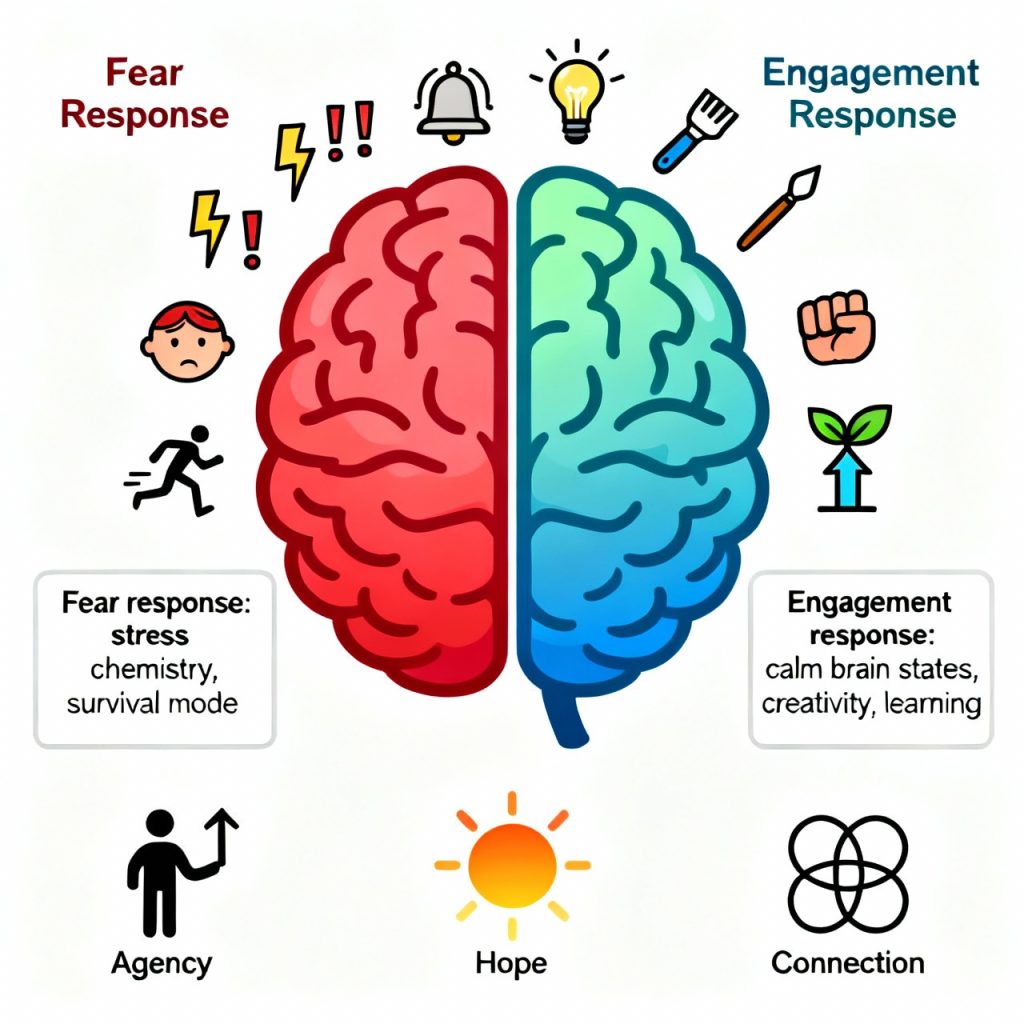
Neuroscience research reveals that both fear and engagement create arousal in the brain—but they produce dramatically different outcomes. Fear drives people toward self-preservation behaviors, while engagement channels that same mental energy into creativity, collaboration, and genuine excitement about work.
When leaders consistently emphasize possibilities rather than punishments, employees naturally:
- Feel more deeply motivated and committed to their work
- Develop true ownership over their responsibilities
- Become significantly more resilient when facing challenges
- Innovate and problem-solve with increased confidence
Simply put, engagement taps into intrinsic motivation—the fundamental human drive to learn, grow, and meaningfully contribute—which proves far more powerful and sustainable than any fear-based approach.
Understanding the Neuroscience of Motivation
Humans are naturally wired to seek positive gains while avoiding losses. Fear-based leadership amplifies the avoidance side of this equation, creating a workplace climate dominated by anxiety and defensive behavior.
Engagement-based leadership, however, speaks directly to fundamental human needs:
- Agency — the ability to have meaningful control over our actions and decisions
- Optimism — a genuine belief in the possibility of success and growth
- Connection — knowing our input matters and our voice is truly heard
By consistently framing challenges as opportunities for growth and success, engagement-based leaders give their teams both clear direction and genuine ownership. Instead of clinging to mere survival, employees begin to lean into possibility and potential.
Making the Shift: From Fear to Engagement
If you’re a leader ready to pivot from intimidation to inspiration, here are five practical steps you can implement immediately:
1. Audit Your Language
Replace threatening statements with supportive questions. Instead of “This mistake better not happen again,” try “What resources or support can help us prevent this situation next time?”
2. Celebrate Strengths Consistently
Regularly call out what your team does well and specifically highlight how those strengths can address bigger challenges and opportunities.
3. Reframe Challenges as Opportunities
Rather than dwelling on potential risks and failures, paint a compelling picture of what becomes possible when the team succeeds.
4. Invite Meaningful Participation
Actively ask for input, ideas, and honest feedback—and demonstrate that you genuinely value and act on what you receive.
5. Invest in Growth
Make meaningful investments in professional development and recognize effort and improvement, not just final outcomes.
✅ Ready to implement these strategies in your organization? Visit OptimizeTeamwork.com and explore comprehensive workshops, assessments, and coaching opportunities with Dr. Rachel Cubas Wilkinson.
Want to measure your current leadership approach before making changes? Take our Fear vs. Engagement Assessment to get a clear baseline and discover specific areas for improvement.
Why This Matters More Than Ever
In today’s rapidly changing business environment, organizations simply cannot afford to stifle creativity or cultivate workplace fear. Innovation, resilience, and adaptability emerge from people who feel genuinely engaged, respected, and motivated to contribute their best work.
While fear-based approaches might generate quick compliance, engagement builds the long-term loyalty, innovation, and sustained performance that organizations need to thrive. Leaders who understand and apply this principle don’t just improve workplace culture—they give their organizations a significant competitive advantage in the marketplace.
Final Thoughts
The fundamental difference between fear-based and engagement-driven leadership comes down to the distinction between compliance and commitment. Fear-based approaches push people to avoid mistakes and stay safe. Engagement-driven leadership inspires people to create solutions and reach for excellence.
Whether you’re leading a team of five or five thousand, remember that your leadership tactics have profound impact. True leadership isn’t just about the goals you set—it’s about how effectively you inspire others to achieve them and grow in the process.
Watch the video above to explore deeper insights into the neuroscience and real-world examples of why engagement consistently outperforms fear-based approaches.
Take Your Next Step
Ready to transform your leadership approach? Start with our Fear vs. Engagement Assessment to discover where your team stands and get actionable insights for improvement.
At OptimizeTeamwork.com, we specialize in helping leaders and organizations make the cultural shift from fear to engagement. Whether you’re interested in comprehensive team health assessments, DISC workshops, or personalized leadership coaching, we’re here to guide your transformation.
Follow Dr. Rachel Cubas Wilkinson for ongoing insights into effective leadership practices. Call us at (561) 677-8806 today and begin your journey toward building a workplace where people genuinely thrive.