Dr. Rachel Cubas-Wilkinson

Dr. Rachel Cubas-Wilkinson is a former Myers-Briggs Company VP with 30+ years of experience in team development, DiSC facilitation, and leadership training. She has delivered 4,000+ workshops and trained 30,000+ leaders worldwide.

disc featured landscape 16 9

What are the 4 DiSC personality types? (and what each means for your team)

The four DiSC personality types are D (Dominance), i (Influence), S (Steadiness), and C (Conscientiousness). The DiSC model maps these behavioral styles across two axes: pace (fast vs. measured) and focus (people vs. task). Each style shapes how someone communicates, makes decisions, and handles conflict on your team. In over 4,000 workshops, Dr. Rachel Cubas-Wilkinson […]

What are the 4 DiSC personality types? (and what each means for your team) Read More »
disc vs clifton featured

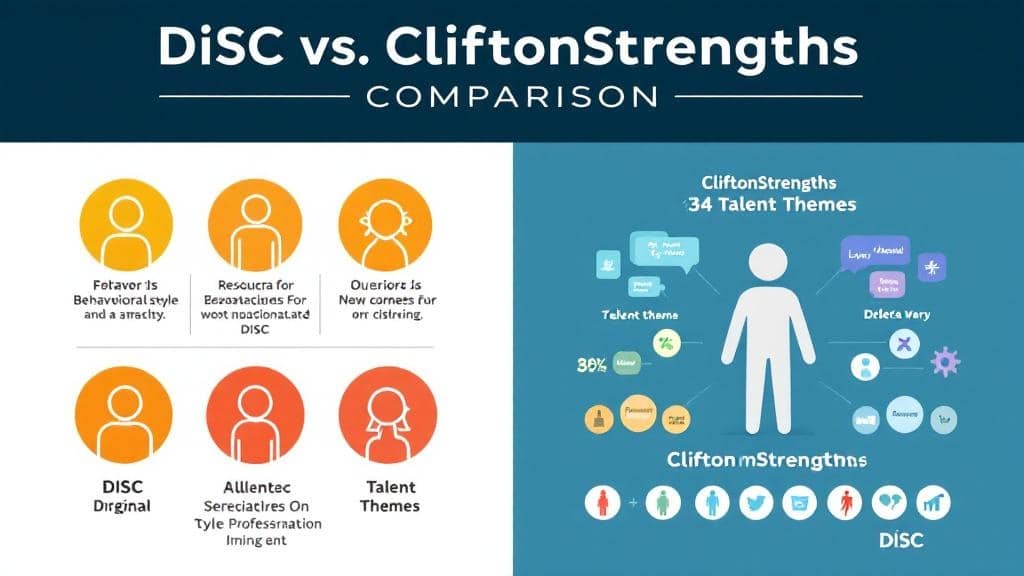
DiSC vs CliftonStrengths: Which Assessment Is Right for Your Team?

Two assessments dominate the workplace personality space. DiSC measures how people behave in team environments. CliftonStrengths identifies what people naturally do best. Both tools improve team performance. But they approach development from opposite directions. Understanding these differences helps you choose the right framework — and avoid the common mistake of expecting one tool to solve

DiSC vs CliftonStrengths: Which Assessment Is Right for Your Team? Read More »

disc facilitator featured

How to Become a DiSC Facilitator: Certification Guide

Organizations hire certified DiSC facilitators to lead team workshops, resolve communication breakdowns, and build stronger workplace culture. The role combines assessment expertise with facilitation skill — and demand is growing as more companies invest in team development. This guide covers the complete pathway from initial training to building a facilitation practice, including certification options, cost

How to Become a DiSC Facilitator: Certification Guide Read More »

DiSC Assessment for Teams: Complete Guide

When your team struggles with miscommunication, stalled projects, or avoidable conflict, a DiSC assessment for teams gives you a shared language to fix what is broken. Instead of guessing why two colleagues clash or why meetings run in circles, DiSC provides a clear, evidence-based framework that maps each person’s behavioral style and shows how those

DiSC Assessment for Teams: Complete Guide Read More »

remote team building featured

Team Building for Remote Teams: Complete Guide | OptimizeTeamwork

Why Remote Teams Need Different Approaches In-person teams pick up cues automatically — body language, hallway conversations, shared meals. Remote teams lose this ambient connection. The result: Miscommunication increases — Tone gets lost in text; intent gets misread. PwC’s 2025 Global Workplace Survey found that 43% of remote workers report frequent misunderstandings in digital communication.

Team Building for Remote Teams: Complete Guide | OptimizeTeamwork Read More »

eq workshop featured

Emotional Intelligence Workshop for Teams: EQ Development | OptimizeTeamwork

What Is Emotional Intelligence in Teams? Emotional intelligence (EQ) is the ability to recognize, understand, and manage emotions — your own and others’. In team contexts, EQ surfaces in four domains: Self-awareness: Recognizing your emotional state and how it affects behavior Self-management: Regulating emotions to remain effective under pressure Social awareness: Perceiving others’ emotions and

Emotional Intelligence Workshop for Teams: EQ Development | OptimizeTeamwork Read More »

A professional team collaborating with trust and confidence in a modern workplace.

In an AI-Driven Workplace, Trust Is Still the Foundation of High-Performing Teams

AI can improve efficiency. It can accelerate research, support decision-making, help draft communication, and reduce time spent on repetitive work. But even as those capabilities expand, one thing still determines whether a team performs well over time: trust. Without trust, teams second-guess each other, withhold concerns, avoid healthy disagreement, and move forward cautiously for the

In an AI-Driven Workplace, Trust Is Still the Foundation of High-Performing Teams Read More »

ot blog 52

Why We’re Assessment-Agnostic: A Former Myers-Briggs VP Explains

We’re assessment-agnostic because no single personality test solves every team problem. Dr. Rachel Cubas-Wilkinson—former VP at The Myers-Briggs Company and former Head of Learning Consulting at Pearson—knows this from the inside. She watched organizations get MBTI when they needed conflict resolution tools. She saw assessments prescribed by sales quotas, not team needs. That’s why OptimizeTeamwork

Why We’re Assessment-Agnostic: A Former Myers-Briggs VP Explains Read More »

ot blog 51

The Assessment Decision Framework: How We Choose the Right Tool

Choosing the right assessment for your team shouldn’t feel like guesswork. After running more than 4,000 workshops, we built a decision framework that matches your team’s actual problem to the right assessment tool—and then pairs it with the workshop format that drives real change. Dr. Rachel, our lead consultant and former VP at The Myers-Briggs

The Assessment Decision Framework: How We Choose the Right Tool Read More »

ot blog 50

Virtual Team Workshops: Best Practices from 500+ Remote Sessions

The best virtual team workshop practices come down to five principles: cap sessions at 90 minutes, use breakout rooms for personality-specific exercises, deploy live polling every 10 minutes, assign pre-work so workshop time equals discussion time, and invest in a skilled facilitator who reads virtual room energy. These aren’t theories. They’re hard-won lessons from delivering

Virtual Team Workshops: Best Practices from 500+ Remote Sessions Read More »